
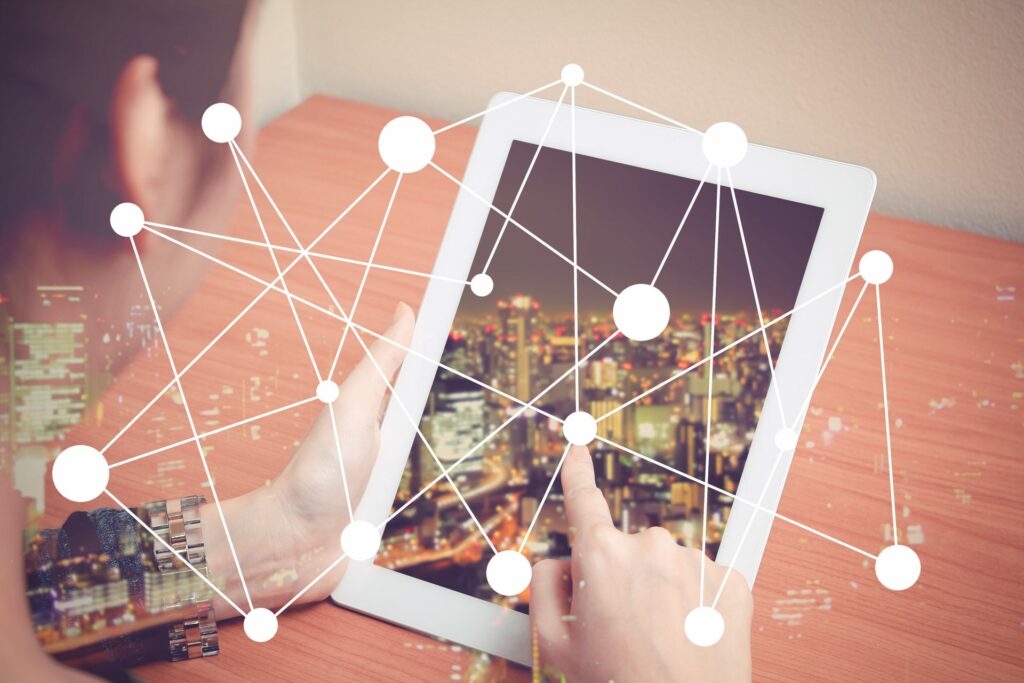
Smart grids have emerged from the need to adapt traditional electricity networks to today’s new demands. The response to these needs lies in the development of smart grids, a groundbreaking technology that goes beyond a simple evolution, radically transforming the way electricity is distributed and consumed.
They integrate state-of-the-art components that enable more efficient and flexible energy management. From real-time monitoring to the integration of renewable sources and the active participation of users, these intelligent networks open up a new horizon in the energy landscape.
Four key smart grid technologies
-
Smart meters: they monitor consumption in real time and enable two-way communication between the user and the utility.
-
Automation: it enables remote management and control of the electricity network, including fault detection and correction.
-
Advanced communications: they facilitate the exchange of information among all players in the power system, such as users, utilities and renewable energy providers.
-
Big Data: analysis of the data collected by smart grids supports intelligent decision-making on grid management and energy consumption.
The role of smart grids for businesses
-
Reduced energy costs: they can help companies significantly cut their energy costs.
-
Improved operational efficiency: smart energy management can enhance the operational efficiency of businesses.
-
Compliance with environmental regulations: they help companies meet increasingly demanding environmental regulations.
-
Development of new products and services: they open the door to new products and services related to energy efficiency and demand-side management.
-
Strategic positioning in the future energy market: companies that adopt smart grids will be better positioned to compete in the energy market of the future.
Get ready for the future of energy. Discover how this technology is transforming the energy world on our website.