
The electricity sector is undergoing an unprecedented transformation. Electricity distribution, a key component of this industry, faces complex challenges such as the growing bidirectionality of electricity flow, driven by renewable self-consumption, and the need to maintain supply quality while preventing fraud and managing new connections. This challenge has led to a paradigm shift: the digitisation of distribution networks.
What does it mean to digitise distribution networks?
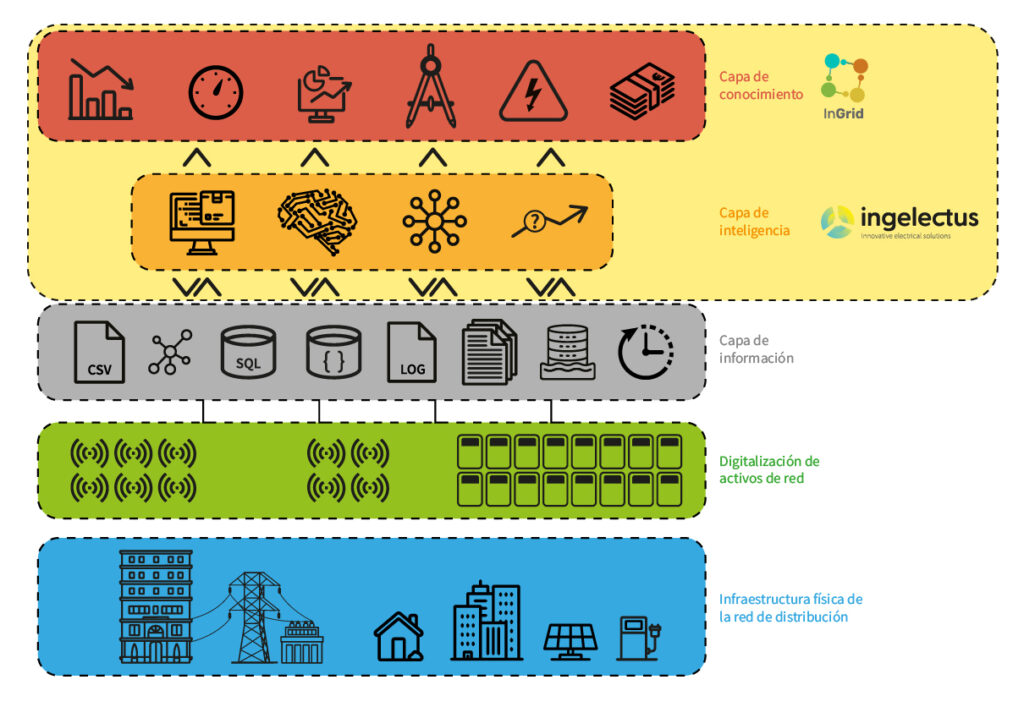
Digitalisation is not just about installing sensors or updating systems; it is a comprehensive process that transforms how electricity networks are operated and managed. It requires a change in mindset, advanced tools and a strategic vision to create true Smart Grids. This transformation journey encompasses five fundamental stages:
- Network infrastructure: This is the starting point, consisting of having an electricity distribution network in place.
- Asset digitisation: Installation of measurement equipment on specific assets (primary substation outputs, transformer stations, meters) to obtain partial observability of the network at the point of measurement.
- Information management: Organising, storing and analysing data from sensors, network topology and customers.
- Operational intelligence: Data exploitation using algorithms, artificial intelligence, digital twins or electrical calculation engines. Converting data into useful information and actions.
- Applied knowledge: Transforming information into specific solutions for specific use cases and the distributor’s needs.
Renewable energy and distribution networks: a key relationship
The proliferation of renewable energy, from solar panels on homes to medium-voltage connected generation plants, has changed the rules of the game. Grids, designed for unidirectional flow, must now manage bidirectional flows and issues such as congestion and surges.
Digitalised grids are emerging as the ideal solution. Technologies such as advanced distribution management systems (ADMS), smart sensors and artificial intelligence enable:
- Real-time monitoring: Detect problems before they occur.
- Active voltage management: Prevent congestion and losses.
- Efficient integration of renewables: Maximise grid stability and sustainability.
Benefits of digitising distribution networks
The digitisation of electricity distribution networks is transforming their operation and planning, improving efficiency and reducing costs. These technologies make it possible to identify problems in real time, minimise interruptions, optimise maintenance, detect fraud and better manage network capacity. They also contribute to sustainability by integrating renewable sources, reducing technical losses and making efficient use of resources.
It also facilitates regulatory compliance by ensuring transparency, resilience and agility, meeting quality standards, minimising losses and reducing emissions. Digital tools also support informed decision-making through analysis and visualisation of data on network behaviour.
- Advanced network knowledge: The installation of smart sensors and meters provides a comprehensive overview of the network, anticipating critical events and improving reliability.
- Cost optimisation and efficiency: Automating processes such as voltage regulation and predictive maintenance minimises interruptions and reduces operating costs.
- Regulatory compliance and sustainability: Responding to more demanding regulations is easier with digital tools that optimise sustainability and transparency.
Paving the Way to the Future
The future of electricity distribution will depend on the ability to integrate renewables, electrify demand and manage data in real time. Advanced Distribution Management Systems (ADMS), together with AI and integrated platforms such as GIS and SCADA, are positioned at the heart of modern operations.
Digitalisation is not only a technical necessity, but also a strategic opportunity to lead the energy transition towards a more sustainable, efficient and decentralised model. By adopting these tools and approaches, distributors can ensure a more reliable electricity supply, comply with regulations and adapt to the demands of an increasingly electrified world.